
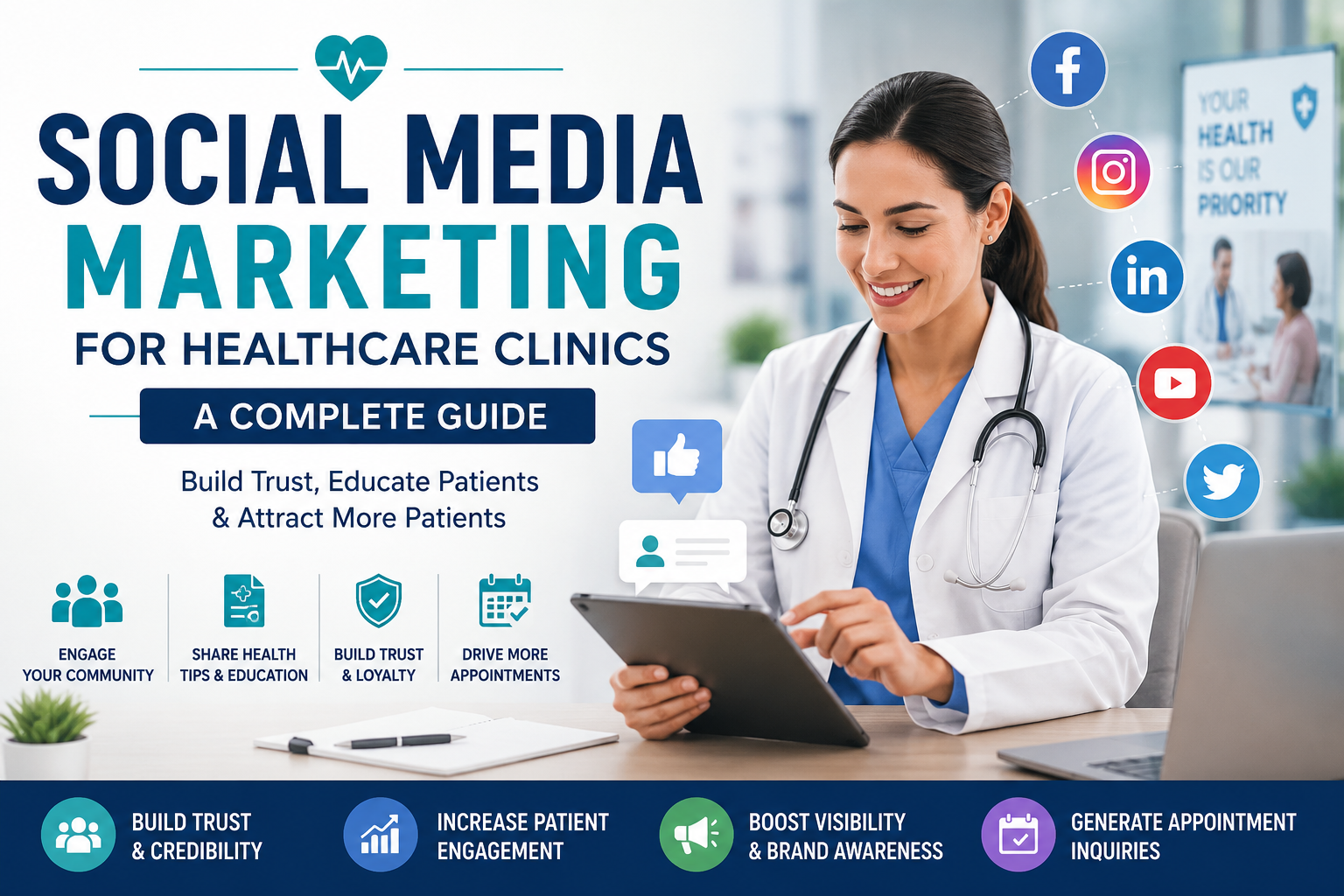
Social Media Marketing for Healthcare Clinics: A Complete Guide to Building Trust and Attracting More Patients
Healthcare has become more digital than ever. Before booking an appointment, many patients search online, read reviews, visit social media profiles, and look for signs that a clinic is trustworthy and active. For healthcare clinics, having a strong social media presence is no longer optional—it’s a core component of a comprehensive digital marketing strategy to connect with current and potential patients.
Implementing professional Social Media Marketing for healthcare clinics goes beyond posting occasional updates or promotional content. When used strategically, social media can help clinics educate patients, build credibility, increase community engagement, and stay top of mind when healthcare services are needed. Platforms like Facebook, Instagram, LinkedIn, and YouTube provide opportunities to share valuable health information, showcase expertise, and strengthen patient relationships.However, many clinics struggle with questions such as: Which social media platforms should we focus on? What type of content should we post? How often should we publish content? And can social media actually help generate patient inquiries?
In this guide, you’ll learn why social media matters for healthcare clinics, the benefits it can provide, the best platforms to use, proven content ideas, common mistakes to avoid, and practical steps for creating an effective healthcare social media strategy.
Why Social Media Marketing Matters for Healthcare Clinics
The way patients find and choose healthcare providers has changed significantly over the past decade. Instead of relying solely on referrals, many people now search online to learn about clinics, doctors, treatments, and patient experiences before making a healthcare decision.
This shift in behavior has made Social Media Marketing for Healthcare Clinics an important part of modern patient communication. Social media platforms allow clinics to be visible where patients already spend their time, helping healthcare providers share valuable information and build meaningful connections with their communities. One of the biggest advantages of social media is trust-building. Healthcare decisions often involve a high level of trust, and patients want to feel confident before booking an appointment. Regularly sharing educational content, health tips, clinic updates, and information about medical services can help demonstrate expertise and credibility over time. Social media also supports patient engagement. Instead of one-way communication, clinics can answer common questions, respond to comments, participate in health awareness campaigns, and create conversations that strengthen relationships with current and potential patients. Another important factor is visibility. Even if a clinic has invested in high-quality Web Development to build an excellent website, patients may never discover it without a consistent online presence. Social media helps increase brand awareness, making it easier for people to recognize and remember a clinic when healthcare needs arise.
In today’s competitive healthcare landscape, clinics that actively educate, engage, and communicate through social media are often better positioned to build trust, expand their reach, and remain connected with the patients they serve.
Benefits of Social Media Marketing for Healthcare Clinics
social media can become much more than a communication channel. It can help healthcare clinics educate patients, strengthen their reputation, and create lasting relationships with the communities they serve. Here are some of the most significant benefits of social media marketing for healthcare clinics.
Increase Patient Awareness
Many patients may not know about your clinic until they need medical care. Social media helps increase visibility by consistently placing your clinic’s name, expertise, and services in front of local audiences. Educational posts, health awareness campaigns, and informative videos can help people discover your clinic long before they require treatment. Over time, this increased visibility can improve brand recognition and ensure your clinic remains top of mind when healthcare needs arise.
Build Trust and Credibility
Trust is one of the most important factors in healthcare decision-making. Patients want reassurance that they are choosing knowledgeable and reliable healthcare providers. Sharing educational content, introducing healthcare professionals, highlighting clinic achievements, and providing accurate medical information can help establish credibility. A well-maintained social media presence demonstrates professionalism and shows that the clinic actively engages with its community.
Improve Patient Engagement
Social media creates opportunities for two-way communication between clinics and patients. Unlike traditional advertising, social platforms allow healthcare providers to interact directly with their audience. Responding to questions, participating in discussions, and sharing helpful content can encourage engagement and strengthen patient relationships. Even simple interactions can help patients feel more connected to a healthcare provider.
Support Patient Retention
Social media is not only useful for attracting new patients—it can also help maintain relationships with existing ones. Regular updates, wellness tips, seasonal health reminders, and educational content keep patients engaged long after their appointments. By consistently providing value, clinics can encourage patients to return for future healthcare needs and remain connected with their services.
Generate Appointment Inquiries
While social media should not focus solely on promotion, it can play an important role in supporting patient acquisition. Educational content often encourages users to learn more about available services, visit a clinic’s website, or contact the clinic for additional information. When patients repeatedly encounter helpful and trustworthy content, they are more likely to consider that clinic when seeking healthcare services. Over time, this can contribute to an increase in appointment inquiries and patient consultations.
Strengthen Healthcare Branding
A strong social media presence helps healthcare clinics communicate their values, expertise, and patient-centered approach. Consistent messaging, visual branding, and educational content create a recognizable identity that differentiates a clinic from competitors. In an increasingly digital healthcare environment, strong branding can influence how patients perceive and remember a healthcare provider, making social media an important part of long-term clinic growth.
Best Social Media Platforms for Healthcare Clinics
Not every social media platform delivers the same results for healthcare clinics. The most effective platform depends on your target audience, medical specialty, content format, and business goals. Rather than trying to be active everywhere, clinics often achieve better results by focusing on the platforms where their patients are most active.
Facebook: Building Community and Local Awareness
Facebook remains one of the most valuable platforms for healthcare clinics because of its broad user base and strong local reach. It allows clinics to share educational content, health awareness campaigns, clinic updates, patient testimonials, and event announcements. Healthcare clinics can also use Facebook Groups to engage with local communities and answer common healthcare questions. Additionally, Facebook’s advertising capabilities make it easier to reach people based on location, age, interests, and health-related demographics.
Best for:
- Family practices
- Dental clinics
- Pediatric clinics
- Multi-specialty healthcare centers
- Local patient acquisition
Instagram: Showcasing the Human Side of Healthcare
Instagram is a highly visual platform that helps clinics build trust through authentic content. Patients often want to see the people behind a healthcare practice before scheduling an appointment.
Clinics can use Instagram to share:
- Health tips and infographics
- Doctor introductions
- Behind-the-scenes content
- Awareness campaigns
- Short educational videos
- Patient success stories (with proper consent)
Features like Stories, Reels, and Highlights help clinics stay visible and engage audiences regularly.
Best for:
- Dermatology clinics
- Cosmetic clinics
- Physiotherapy clinics
- Wellness centers
- Pediatric practices
LinkedIn: Establishing Professional Authority
While LinkedIn may not generate direct patient appointments for every clinic, it can be extremely valuable for building professional credibility. Healthcare professionals can share industry insights, medical advancements, healthcare trends, and thought leadership content. This can strengthen relationships with healthcare partners, referral networks, insurers, and other professionals within the healthcare ecosystem.
LinkedIn is especially useful for clinics that serve corporate clients or specialize in occupational health services.
Best for:
- Specialty clinics
- Healthcare consultants
- Corporate healthcare providers
- Medical professionals building personal brands
YouTube: Educating Patients at Scale
Video content continues to grow in popularity, and YouTube provides healthcare clinics with an opportunity to educate patients through detailed, long-form content. Patients frequently search YouTube for information about symptoms, treatments, procedures, recovery expectations, and preventive care. Clinics that consistently publish educational videos can position themselves as trusted sources of information.
Examples include:
- Frequently asked questions
- Treatment explanations
- Preventive health advice
- Doctor interviews
- Health awareness videos
ince YouTube videos often appear in Google search results, they can complement your SEO Services and support overall online visibility
Best for:
- Specialty healthcare clinics
- Dental clinics
- Orthopedic clinics
- Physiotherapy clinics
- Clinics focused on patient education
Google Business Profile: The Most Overlooked Social Platform
Although many people do not think of it as a social media platform, Google Business Profile plays a crucial role in local healthcare marketing. Patients searching for nearby healthcare services often see Google Business Profiles before visiting a website. Regularly posting updates, responding to reviews, sharing photos, and maintaining accurate business information can improve local visibility and patient trust. For many clinics, utilizing professional GMP Optimization can directly influence appointment inquiries and local search performance
Best for:
- Every healthcare clinic
- Local patient acquisition
- Reputation management
- Local search visibility
Which Platform Should Healthcare Clinics Prioritize?
The best approach is usually to focus on two or three platforms rather than trying to manage every channel. Facebook and Instagram are often the strongest combination for patient engagement and community building, while YouTube supports educational content and LinkedIn helps establish professional authority. The key is to choose platforms that align with your patients’ preferences and create content that genuinely helps, informs, and engages your audience.
Content Ideas Healthcare Clinics Can Post on Social Media
One of the biggest challenges healthcare clinics face with social media marketing is deciding what to post consistently. Many clinics either post only promotional content or struggle to maintain a regular posting schedule because they run out of ideas. The good news is that healthcare clinics have access to a wide range of valuable content topics that can educate patients, build trust, and encourage engagement. The most successful healthcare social media strategies focus on helping patients rather than constantly selling services.
Share Health Tips and Preventive Care Advice
Educational content is one of the most effective ways to build credibility and provide value to your audience.
Consider sharing:
- Seasonal health tips
- Preventive care recommendations
- Nutrition advice
- Wellness tips
- Common symptom awareness
- Lifestyle improvement suggestions
For example, a pediatric clinic might share tips for keeping children healthy during flu season, while a dental clinic could post advice on maintaining good oral hygiene.
Answer Frequently Asked Patient Questions
Patients often have similar concerns before booking an appointment. Social media provides an excellent platform for addressing these questions in a simple and accessible format.
Examples include:
- When should I see a specialist?
- What should I expect during my first visit?
- How can I prepare for a medical procedure?
- What symptoms should not be ignored?
Answering common questions helps educate patients while demonstrating expertise.
Introduce Doctors and Healthcare Staff
Patients are more likely to trust healthcare providers when they feel familiar with the people behind the clinic.
Consider creating content that highlights:
- Doctor profiles
- Professional qualifications
- Areas of specialization
- Staff introductions
- Team achievements
These posts help humanize your clinic and make healthcare professionals more approachable.
Share Patient Success Stories
Patient success stories can be powerful trust-building content when shared ethically and with proper consent.
These stories may include:
- Recovery journeys
- Rehabilitation progress
- Treatment outcomes
- Wellness transformations
Rather than focusing on promotion, emphasize the patient’s experience and the positive impact of receiving appropriate care.
Participate in Health Awareness Campaigns
Healthcare clinics can stay relevant by supporting nationally and globally recognized health awareness initiatives.
Examples include:
- World Heart Day
- Breast Cancer Awareness Month
- Diabetes Awareness Month
- Mental Health Awareness campaigns
- World Health Day
These campaigns provide valuable opportunities to educate communities and increase engagement around important health topics.
Create Educational Videos
Video content is becoming increasingly important across social media platforms. Short, informative videos often generate higher engagement than text-based posts.
Healthcare clinics can create videos covering:
- Health tips
- Treatment explanations
- Frequently asked questions
- Myth-busting content
- Preventive care guidance
Videos help simplify complex medical topics and make information easier for patients to understand.
Showcase Behind-the-Scenes Content
Patients often appreciate seeing what happens behind the scenes at a healthcare clinic. This type of content can reduce anxiety and help patients feel more comfortable before visiting.
Examples include:
- Clinic tours
- New equipment introductions
- Staff training sessions
- Community outreach activities
- Day-in-the-life content
Behind-the-scenes posts help create transparency and strengthen trust.
Share Clinic Updates and Announcements
Social media is also an effective channel for keeping patients informed about important clinic news.
Updates may include:
- New services
- Extended hours
- New healthcare providers joining the team
- Community events
- Holiday schedules
- Health camps and screenings
These updates ensure patients stay informed while maintaining an active online presence.
Focus on Education Before Promotion
A useful rule for healthcare content marketing is to prioritize education over promotion. Patients are more likely to engage with content that helps solve problems, answers questions, or improves their understanding of health-related topics.
When clinics consistently provide valuable information, they naturally build trust, strengthen relationships, and position themselves as reliable healthcare resources within their communities.
Common Social Media Marketing Mistakes Healthcare Clinics Should Avoid
Many healthcare clinics understand the importance of social media but struggle to achieve meaningful results. In most cases, the problem is not the platform itself—it’s the strategy behind it. Avoiding common mistakes can help clinics maximize their efforts, build stronger patient relationships, and maintain a professional online presence.
Posting Inconsistently
One of the most common mistakes is posting content irregularly. Some clinics may post frequently for a few weeks and then disappear for months. Inconsistent activity makes it difficult to build audience engagement and maintain visibility. A simple content calendar can help ensure regular posting and keep patients informed throughout the year.
Focusing Only on Promotions
Patients generally do not follow healthcare clinics to see constant advertisements. Social media users are more likely to engage with content that educates, informs, or helps them solve a problem. A feed filled entirely with promotional posts can reduce engagement and make the clinic appear overly sales-focused. Instead, clinics should balance promotional content with educational resources, health tips, awareness campaigns, and patient-focused information.
Ignoring Patient Questions and Comments
Social media is designed for interaction. When patients leave comments or ask questions, they expect a response. Failing to engage with followers can create a negative impression and make patients feel ignored. While healthcare providers should avoid discussing personal medical information publicly, responding professionally to general inquiries can help strengthen trust and improve patient experience.
Sharing Complex Medical Information Without Simplification
Healthcare professionals often have deep medical knowledge, but social media audiences may not have the same level of understanding. Using excessive medical terminology can make content difficult to understand and reduce engagement. Effective healthcare content should simplify complex topics into clear, practical information that patients can easily apply.
Overlooking Patient Privacy
Protecting patient confidentiality is one of the most important responsibilities for healthcare organizations. Before sharing testimonials, photos, videos, or patient success stories, clinics should always obtain proper consent and follow applicable privacy regulations. Respecting patient privacy helps maintain trust and protects both patients and healthcare providers.
Using the Same Content on Every Platform
Each social media platform has different user behaviors and content preferences.
For example:
- Instagram often performs best with visual content and short videos.
- Facebook supports community engagement and local updates.
- LinkedIn is better suited for professional insights and industry discussions.
- YouTube works well for educational video content.
Adapting content to each platform can improve engagement and help clinics reach their audience more effectively.
Not Tracking Performance
Many clinics invest time in social media marketing without measuring results. Without tracking performance, it becomes difficult to understand which content is working and where improvements are needed.
Important metrics may include:
- Engagement rate
- Reach and impressions
- Website traffic
- Appointment inquiries
- Video views
- Audience growth
Monitoring these metrics helps clinics make informed decisions and improve future content strategies.
Trying to Be on Every Platform
A common misconception is that healthcare clinics need to maintain a presence on every social media platform. In reality, managing too many platforms can lead to inconsistent content and reduced quality. It is often more effective to focus on a few platforms where patients are most active and create valuable content consistently rather than spreading resources too thin.
Success Comes from Consistency and Value
The most successful healthcare social media strategies are built around patient education, trust, and consistency. By avoiding common mistakes and focusing on delivering useful information, clinics can create a stronger online presence and develop meaningful relationships with their audience over time.
How to Create an Effective Social Media Strategy for Your Healthcare Clinic
Successful social media marketing does not happen by chance. The healthcare clinics that consistently attract engagement and build strong online communities typically follow a clear strategy rather than posting content randomly. Whether you’re managing social media for a small clinic or a growing healthcare practice, the following steps can help you create a more effective and sustainable social media strategy.
1. Define Clear Goals
Before creating content, identify what you want to achieve through social media.
Common healthcare social media goals include:
- Increasing brand awareness
- Educating patients
- Building trust and credibility
- Improving patient engagement
- Driving website traffic
- Generating appointment inquiries
Having clear goals makes it easier to measure success and create content that supports your objectives.
2. Understand Your Target Patients
Effective communication starts with understanding who you are trying to reach.
Consider questions such as:
- What age groups do your patients belong to?
- What health concerns do they commonly have?
- Which social media platforms do they use?
- What information are they searching for online?
- What questions do they frequently ask?
For example, a pediatric clinic may create content aimed at parents, while a physiotherapy clinic may focus on adults seeking pain relief, injury recovery, or mobility improvement.
The better you understand your audience, the more relevant your content will become.
3. Choose the Right Platforms
Not every social media platform needs to be part of your strategy.
Instead of spreading your efforts across multiple channels, focus on the platforms that align with your audience and content style.
For many healthcare clinics:
- Facebook supports local community engagement.
- Instagram helps build trust through visual content.
- YouTube is ideal for patient education.
- LinkedIn supports professional networking and authority building.
Start with two or three platforms and focus on maintaining quality and consistency.
4. Create a Content Plan
One of the easiest ways to stay consistent is by developing a content calendar.
A balanced healthcare content strategy might include:
- Educational health tips
- Frequently asked questions
- Doctor introductions
- Awareness campaigns
- Patient success stories
- Clinic updates
- Preventive care advice
Planning content in advance reduces last-minute stress and ensures a steady flow of valuable information.
5. Prioritize Patient Education
The most effective healthcare social media content focuses on helping patients make informed decisions. Instead of constantly promoting services, aim to answer questions, provide practical advice, and address common concerns. Educational content not only builds trust but also encourages people to view your clinic as a reliable source of information. A helpful approach is to ask:
“What information would be valuable to a patient today?”
The answer often becomes your next content idea.
6. Encourage Engagement
Social media should be a conversation, not just a broadcasting channel.
Encourage interaction by:
- Asking questions
- Running polls
- Responding to comments
- Inviting feedback
- Participating in awareness campaigns
Engagement helps strengthen relationships and signals to social media algorithms that your content is valuable.
7. Monitor and Improve Performance
A successful social media strategy evolves over time.
Regularly review key performance indicators such as:
- Reach
- Engagement rate
- Follower growth
- Website visits
- Video views
- Appointment inquiries
By analyzing results, you can identify which content resonates most with your audience and refine your strategy accordingly.
Focus on Consistency, Not Perfection
Many healthcare clinics delay social media efforts because they want every post to be perfect. In reality, consistency matters far more than perfection. A clinic that regularly shares useful, patient-focused content will often outperform a clinic that posts occasionally, regardless of how polished the content appears. Over time, consistent communication helps build trust, strengthen patient relationships, and establish a credible online presence.
Frequently Asked Questions About Social Media Marketing for Healthcare Clinics
How often should healthcare clinics post on social media?
Consistency is more important than posting frequency. Most healthcare clinics can benefit from posting 3–5 times per week across their primary social media platforms. The ideal schedule depends on available resources, audience engagement, and content quality. A consistent posting schedule helps maintain visibility and keeps patients engaged over time.
Which social media platform is best for healthcare clinics?
There is no single best platform for every healthcare clinic. Facebook and Instagram are often effective for patient engagement and community building, while YouTube supports educational content and LinkedIn helps establish professional credibility. The right platform depends on your target audience, healthcare specialty, and marketing goals.
Can social media help healthcare clinics attract new patients?
Yes. While social media is primarily a relationship-building and educational tool, it can also increase awareness and encourage appointment inquiries. Patients who regularly see valuable content from a clinic may be more likely to consider that provider when they need healthcare services.
What type of content performs best for healthcare clinics?
Educational and patient-focused content typically generates the highest engagement. Examples include health tips, preventive care advice, frequently asked questions, awareness campaigns, doctor introductions, educational videos, and clinic updates. Content that helps patients solve problems or learn something useful tends to perform better than purely promotional posts.
How long does it take to see results from social media marketing?
Results vary depending on the clinic’s goals, content quality, consistency, and audience size. Increased engagement and visibility may occur within a few weeks, while significant improvements in brand awareness, patient trust, and appointment inquiries often take several months of consistent effort.
Should healthcare clinics use paid social media advertising?
Paid advertising can be beneficial when used strategically.Running targeted PPC Ads on social networks can help healthcare clinics reach specific local audiences, promote health awareness campaigns , increase visibility for new services, and drive traffic to appointment booking pages. However, organic content and community engagement should remain important parts of the overall strategy.
How can healthcare clinics maintain patient privacy on social media?
Patient privacy should always be a top priority. Clinics should never share patient information, images, testimonials, or success stories without proper consent. Healthcare organizations should also follow applicable privacy regulations and establish clear internal guidelines for social media content.
Is social media marketing suitable for small healthcare clinics?
Absolutely. Social media can be particularly valuable for small healthcare clinics because it provides a cost-effective way to build local awareness, educate patients, and compete with larger healthcare organizations. Consistent, high-quality content can help smaller clinics establish credibility and strengthen community relationships.
What metrics should healthcare clinics track on social media?
Important metrics include:
- Engagement rate
- Reach and impressions
- Follower growth
- Website traffic
- Video views
- Click-through rates
- Appointment inquiries
Tracking these metrics helps clinics understand what content resonates with their audience and identify opportunities for improvement.
What is the biggest mistake healthcare clinics make on social media?
One of the most common mistakes is treating social media as a promotional channel rather than an educational resource. Clinics that focus exclusively on advertising often struggle to build engagement. The most successful healthcare social media strategies prioritize patient education, trust-building, and consistent communication.