Why Bangalore Gynecologists Need a Different Digital Strategy
Bangalore isn’t just competitive — it’s saturated.
From large hospital chains to aggregator platforms and local clinics, every gynecologist is competing for the same high-intent patients who are actively searching online before making a decision. Today, a woman doesn’t just “visit a doctor.” She researches, compares, evaluates trust, and only then books an appointment.
And that changes everything.
Because in women’s health, decisions are not just medical — they are deeply personal, emotional, and privacy-driven.
A patient searching for PCOS treatment, infertility solutions, pregnancy care, or a female gynecologist is not casually browsing. She is looking for someone she can trust with sensitive, life-impacting concerns.
Why Generic Digital Marketing Fails for Gynecologists
Most digital marketing advice for doctors is generic.
Do SEO. Run ads. Post on social media.
But that approach doesn’t work well for gynecology.
Because patients are highly selective. Trust matters more than visibility. Privacy and comfort influence decisions. Reviews often matter more than ads.
If your strategy doesn’t reflect this reality, you may get traffic — but not appointments.
What Actually Works in Bangalore’s Market
To consistently attract high-quality patient leads, you need a strategy that:
- captures high-intent local searches
- builds credibility through EEAT
- guides patients through a clear journey
- converts attention into real bookings
At Founders Media, the focus is not just visibility.
It’s turning online presence into predictable patient acquisition.
Understanding How Today’s Patients Choose a Gynecologist in Bangalore
Choosing a gynecologist today is no longer a simple referral-based decision.
Patients follow a very specific path before booking. If you understand this journey, your entire marketing becomes more effective.
From Google Search to Appointment: The Real Journey
Most journeys begin with a concern.
Irregular periods. Fertility issues. Pregnancy confirmation.
At this stage, the patient is not searching for a clinic. She is searching for understanding.
She looks for symptoms, causes, and early guidance.
This is the awareness stage.
As the concern becomes serious, behavior changes.
Now she searches:
- best gynecologist in Bangalore
- female gynecologist near me
- fertility specialist in Bangalore
She compares options, reads reviews, explores websites, and evaluates trust.
This is the consideration stage.
Finally, she shortlists 2–3 clinics.
Now she looks for:
- easy booking options
- location convenience
- doctor profile
- patient reviews
If everything feels right, she books.
If something feels off, she moves on instantly.
This is the conversion stage.
What Actually Influences the Final Decision
This decision is not purely logical.
It is influenced by:
Trust and credibility — reviews, experience, and overall presence
Privacy and comfort — tone, messaging, and environment
Doctor preference — especially female gynecologists
Convenience — location, booking ease, responsiveness
Why This Journey Matters
If your marketing only focuses on traffic, you miss the real opportunity.
Patients don’t convert instantly.
They discover → evaluate → decide.
Your strategy must support all three stages.
Search Intent & Keyword Strategy for Bangalore Gynecologists
Not all searches are equal.
Some are informational.
Some are transactional.
Your goal is to target the ones that lead to appointments.
Core Keywords That Drive Appointments
High-intent searches include:
- gynecologist in Bangalore
- female gynecologist near me
- IVF clinic in Bangalore
- fertility specialist in Bangalore
These are decision-stage queries.
But many clinics stop here — and that’s a mistake.
The Role of Condition-Based Searches
A large portion of high-converting traffic comes from:
- PCOS treatment
- infertility consultation
- high-risk pregnancy
- fibroid surgery
These users already know their problem.
They are closer to booking.
The Power of Local Searches
Healthcare decisions are location-driven.
Patients search within their area:
Whitefield, Koramangala, HSR Layout, Jayanagar.
Ranking for these micro-locations brings higher intent and lower competition.
Balancing Informational and Transactional Intent
Patients don’t directly search for doctors.
They first search for problems.
Then solutions.
Then doctors.
If your content appears early, trust builds before comparison begins.
Building a Strong Content Structure
Your website should work like a system:
One main page (gynecologist in Bangalore)
Supported by clusters:
- PCOS
- fertility
- pregnancy
- procedures
Core Digital Marketing Pillars for Gynecologists
Once your keyword strategy is clear, the next step is execution.
This is where most clinics struggle—not because they aren’t trying, but because their efforts are scattered. A bit of SEO here, some ads there, occasional social posts… but nothing works consistently.
For gynecologists in Bangalore, digital marketing works only when a few core pillars are executed properly and connected together.
SEO Strategy: Being Visible at Every Stage
Search Engine Optimization is not just about ranking your website. It’s about showing up whenever a potential patient is searching—whether she is trying to understand a symptom or actively looking for a doctor.
Your website must first meet basic expectations. It should be fast, mobile-friendly, and easy to navigate. Most users are on their phones, often searching in moments of concern. If your site feels slow or confusing, they won’t stay.
But technical setup is just the foundation.
What really drives results is how your content is structured. Each important service—PCOS treatment, pregnancy care, infertility consultation, gynecological procedures—should have its own page written in simple, patient-friendly language.
Alongside this, your blog should answer real questions patients are already asking. This helps you appear earlier in their journey and builds familiarity before they even start comparing clinics.
When done right, SEO makes your clinic visible across the entire decision journey—not just at the final stage.
Local SEO & Google Business Profile: Winning Nearby Patients
For gynecologists, local visibility often matters more than total website traffic.
When someone searches “gynecologist near me” or “gynecologist in Whitefield,” Google prioritizes local listings. This is where your Google Business Profile becomes critical.
A well-optimized profile can generate calls, messages, and direction requests without the patient even visiting your website.
To make this effective, your profile should feel complete and trustworthy. This includes accurate clinic details, relevant service categories, real images, and consistent updates.
But the strongest factor is still reviews.
Patients often decide within seconds based on ratings and feedback. A profile with strong, recent reviews builds immediate confidence.
When your Google presence is combined with location-focused website pages, you begin to dominate specific areas instead of competing across the entire city.
Google Ads: Capturing High-Intent Patients Instantly
SEO builds long-term visibility, but Google Ads gives you immediate reach.
This is especially important for high-intent searches where patients are ready to act. If your clinic appears at the top at that moment, your chances of getting an inquiry increase significantly.
However, effective advertising is not just about running campaigns.
It requires:
- selecting the right keywords
- targeting specific locations
- writing ad copy that addresses real concerns
Patients respond to clarity and reassurance.
Messaging that highlights privacy, availability, ease of booking, and convenience often performs better than generic promotional language.
When managed properly, Google Ads becomes a reliable source of consistent, high-quality leads.
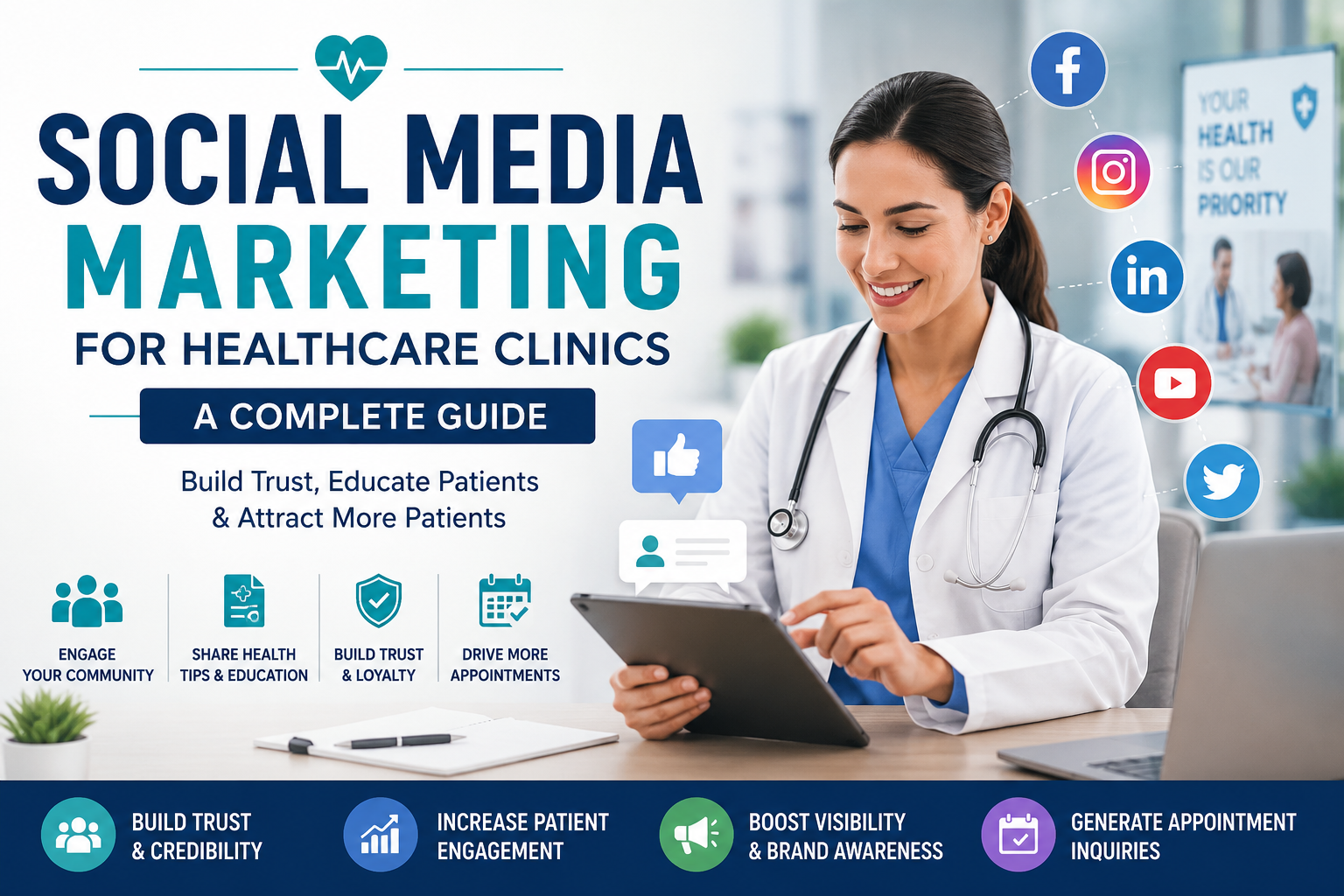
Social Media: Building Trust Before the First Visit
Social media for gynecologists is not about reach or virality. It’s about comfort and familiarity.
Patients may not follow your page actively, but repeated exposure to helpful, respectful content builds recognition and trust over time.
Content should focus on education and reassurance—explaining conditions, addressing common concerns, and guiding patients through different stages of women’s health.
Tone matters more than volume.
It should feel calm, clear, and non-judgmental. When patients feel understood, they are more likely to choose your clinic even before interacting with you.
Reputation & Review Management: Your Strongest Conversion Driver
In healthcare, reputation directly influences decisions.
Most patients read reviews before booking. Often, this is the final deciding factor.
A clinic with consistent, positive feedback and meaningful responses will always stand out.
Reviews should not be left to chance. A simple system—requesting feedback after consultations—can steadily build a strong online reputation.
Equally important is how you respond. Professional, respectful replies that protect patient privacy reinforce trust.
Over time, this becomes one of your strongest conversion drivers.
Bringing It All Together
Each pillar works individually, but the real impact comes when they support each other.
SEO brings visibility.
Local SEO captures nearby intent.
Ads bring immediate inquiries.
Social media builds familiarity.
Reviews reinforce trust.
Together, they form a system—not isolated efforts.
Designing a Patient Acquisition Funnel That Actually Converts
Once your channels are in place, the next step is structure.
Because visibility alone doesn’t convert patients.
You need a clear funnel that guides them from discovery to booking without friction.
Awareness Stage: Becoming Visible When It Matters
At the beginning, the patient is not looking for a clinic. She is trying to understand her situation.
This is where your content becomes important.
When your clinic provides clear, helpful information about symptoms, conditions, and concerns, you become part of her early research.
This stage is not about promotion. It is about building trust quietly.
Consideration Stage: Building Trust and Reducing Doubt
As the patient realizes she needs medical help, she begins comparing options.
She evaluates doctors, reads reviews, checks websites, and looks for clarity.
Your website becomes the key decision factor here.
It should clearly communicate your expertise, approach, and patient experience. Even small details—tone, clarity, structure—can influence whether she trusts you.
Conversion Stage: Making Booking Effortless
Once she shortlists a few options, the decision becomes simple but sensitive.
If your clinic makes it easy to book, you win.
If there is confusion or delay, she moves on.
Clear contact options, quick responses, and easy booking systems are essential at this stage.
Why Funnels Fail
Many clinics focus on only one stage.
Some run ads without building trust.
Others create content without guiding users toward booking.
A working funnel connects everything—from awareness to action—so the journey feels natural.
Local SEO Blueprint for Gynecologists in Bangalore
Local SEO is one of the most powerful drivers of high-intent patients.
Because when someone searches for a nearby gynecologist, they are already ready to take action.
Google Business Profile: Your Most Important Local Asset
Your visibility in Google Maps depends on your profile.
A strong profile builds instant trust through accurate information, visuals, and reviews.
Patients often decide before even visiting your website.
Building Local Relevance Across Bangalore
Different areas in Bangalore behave like separate markets.
If your website only targets the entire city, you miss local opportunities.
By focusing on specific areas—like Whitefield, Koramangala, or HSR—you can capture more relevant traffic with higher intent.
Consistency Across Platforms
Your clinic details must remain consistent across directories and listings.
This strengthens credibility and improves local rankings.
Even small inconsistencies can weaken trust signals.
Multi-Location Strategy
If you operate in multiple locations, each should have its own identity online.
Separate pages, localized content, and individual profiles help you rank better and avoid internal competition.
Conversion Optimization: Turning Clicks into Confirmed Appointments
Getting traffic is only half the job.
Whether a patient finds you through Google, maps, or ads, the real question is: what happens next?
Because at this stage, she is already interested. But interest alone doesn’t guarantee action. Small friction points—confusion, slow loading, unclear messaging—can quietly push her toward another clinic.
Conversion optimization is about removing that friction and making the decision feel simple, safe, and immediate.
High-Converting Website Experience
When a patient lands on your website, she should not have to figure things out.
Within seconds, it should be clear what your clinic offers, who the doctor is, and how she can book an appointment.
Most users are on mobile. If your website feels slow or difficult to navigate, they won’t stay.
A well-optimized gynecology website focuses on clarity and comfort.
It should present:
- clear services (PCOS, pregnancy, fertility, procedures)
- doctor profile with credentials
- patient testimonials
- visible contact options
Tone also plays a key role. The content should feel reassuring, respectful, and easy to understand—not overly technical or clinical.
CTA Strategy: Making Action Effortless
Even when a patient trusts you, she may not take action unless you guide her.
Your website should make the next step obvious.
This includes:
- a clear “Book Appointment” button
- click-to-call functionality
- WhatsApp integration
- easy access to directions
The goal is not to push, but to remove effort.
If a patient has to search for how to contact you, chances are she won’t.
Reducing Friction in Lead Capture
When a patient decides to reach out, the process should feel simple.
Long forms reduce conversions—especially in sensitive healthcare contexts.
A minimal approach works best:
- name
- phone number
- preferred time
- brief concern (optional)
Speed matters more than perfection. A quick response significantly increases the chances of conversion.
Trust Signals That Influence Decisions
Before booking, patients look for reassurance.
This comes from:
- doctor credentials
- patient reviews
- clinic visuals
- clear communication
Even small trust signals can remove hesitation and encourage action.
Tracking What Works
Without tracking, you are guessing.
You should be able to measure:
- calls
- form submissions
- WhatsApp inquiries
This helps you refine your strategy and improve results over time.
Real-World Use Cases & Playbooks for Gynecologists in Bangalore
Strategies matter, but real-world application is what creates results.
Use Case 1: Single-Location Clinic
A gynecologist in Koramangala relies mostly on referrals, with limited online presence.
The strategy focuses on strengthening local visibility and trust.
Google Business Profile is optimized, reviews are actively collected, and key service pages are created on the website.
A small, targeted ad campaign runs within a limited radius.
The result is not just more inquiries, but better-quality patients who already trust the clinic before visiting.
Use Case 2: Multi-Location Fertility Clinic
A clinic with branches across Bangalore struggles with consistency.
The approach here is structured.
Each location gets dedicated pages and profiles. Content focuses on fertility-specific topics. Campaigns are segmented by location.
Tracking is standardized, allowing better optimization.
Over time, each branch builds its own strong presence instead of relying on a central identity.
What These Examples Show
Different clinics need different strategies.
But when local intent, trust, and structure are aligned, results become predictable.
Common Marketing Mistakes Gynecologists Make.
Even experienced clinics make small mistakes that limit growth.
Over-Reliance on Aggregators
Aggregator platforms provide visibility, but they reduce control.
You compete on price and availability rather than trust and brand.
The solution is balance—use them, but build your own presence.
Generic Content
Surface-level or copied content doesn’t build trust.
Patients respond better to clear, experience-based, and patient-focused information.
Ignoring Reviews
Patients check reviews before booking.
Without consistent feedback, even a good clinic can lose trust.
No Tracking
Running campaigns without tracking leads to wasted budget.
You need clarity on what actually works.
Focusing Only on Traffic
Traffic without conversion leads to poor results.
Your website and booking experience must support decision-making.
FAQs
How can a gynecologist in Bangalore get more patients online?
By combining local SEO, a strong website, and targeted ads.
But more importantly, by building trust through reviews and clear communication.
Is digital marketing ethical for doctors?
Yes, when it focuses on education and transparency rather than exaggeration.
What is the best channel?
Each serves a role.
SEO builds long-term growth.
Ads bring immediate leads.
Social media builds familiarity.
How long does SEO take?
Typically 2–4 months to start seeing consistent patient inquiries.
Can I stop using aggregator platforms?
Not immediately. Gradually reduce dependency as your own presence grows.
How to handle negative reviews?
Respond professionally and respectfully without sharing sensitive details.
What budget is needed?
Start small and focused. Scale based on results.
Can WhatsApp be used?
Yes, for quick communication, but with professional handling of patient data.
Conclusion
Digital marketing for gynecologists in Bangalore is not about doing more—it’s about doing the right things in a structured way.
Patients today don’t choose randomly. They search, evaluate, and decide based on trust, clarity, and ease of access.
When your strategy aligns with this behavior, growth becomes predictable.
Instead of relying on referrals or platforms, you create a system that consistently brings qualified patient inquiries.
At Founders Media, the focus is simple:
Helping gynecologists, fertility clinics, and women’s health centers turn digital visibility into real appointments.
If you want to understand how many patients your clinic could generate through the right strategy, the next step is straightforward.
Request a digital audit or strategy consultation.
And see what your growth could look like in the next 3 to 6 months.